by Kevin Morgan
In August 1662, nearly two thousand Puritan ministers in the Church of England were driven from their churches in what became known as “The Great Ejection.” One of these men was Thomas Watson, a popular preacher and pastor who had been ministering at his London church for nearly 16 years.
The ejection came after a period of enormous political and religious upheaval in England. In 1649, King Charles I was executed for treason and the monarchy was dissolved. For the next 11 years, England was ruled by Parliament and, later, Oliver Cromwell, who allowed various non-Anglican groups such as Presbyterians, Congregationalists and Baptists to worship freely for a time.
This all changed in 1660 when Charles II returned to England and was recognized as king. He restored the monarchy and the episcopal Church of England and gathered a new parliament that was hostile to the Puritan movement and non-Anglican Christians.
The greatest blow came in 1662 with the Act of Uniformity, which required all ministers to conform their theology and practice to the Book of Common Prayer or be removed from the Church of England. For Watson and thousands of others, conformity meant violating their consciences. While conformity would have been easier, they chose to stand firm in their convictions. Because of this, they were forced out of their churches and away from the people they had loved and ministered to for decades.
The cost of these deep convictions became most painfully real on what came to be known as “Farewell Sunday.” On that Sunday in August of 1662, many of these pastors preached their last sermon for their congregations. Later laws prohibited unauthorized religious gatherings and kept ministers from coming within five miles of their former churches. So, for many of these men, Farewell Sunday was the last time they would see their beloved congregations.
Some of the “Farewell Sermons” have been preserved and can be read today. Among them is Thomas Watson’s sermon on 2 Corinthians 7:1, which says, “Since we have these promises, beloved, let us cleanse ourselves from every defilement of body and spirit, bringing holiness to completion in the fear of God.”
His sermon, titled “Parting Counsel,” is one of the most tender, compassionate sermons I’ve ever read. Watson’s words show him to be a pastor who dearly loves his congregation and is deeply grieved over having to leave them, yet remains hopeful because he is entrusting them to a kind and merciful God.
He begins his sermon by comparing Paul’s love for the “dearly beloved” flock in Corinth with his own love for his congregation in London. He calls his people to “observe that the affections of the true gospel minister towards his people are very ardent.” He is essentially telling them: “Do you see how much affection Paul has for the saints in Corinth? That is how I feel about all of you!”
Watson chose to leave his congregation with twenty points of practical counsel that would help them continue to grow in their faith and “bring holiness to completion,” as his sermon text says. He writes:
…let me leave some legacy with you before I go from you. I cannot but give you some counsel and advice for your souls… There are, my beloved, these twenty directions, that I desire you to take special notice of, which I would leave as advice and counsel with you about your souls.
This blog post will be the first in a series that will cover each of those “twenty directions” with some commentary added to each one. I believe anyone reading through these counsels today will find them just as practical and spiritually beneficial as Watson’s London parishioners did over 360 years ago. What follows are the first six of them:
The response of one who has been set apart by God to holiness is, in turn, to set themselves apart to him through daily devotion. Under this heading, Watson encourages his congregation to “begin the day with God, visit God in the morning before you make any other visit.” One of the primary means by which we commune with God is through prayer and his word.
The Puritans believed that time is our most precious resource. Watson wrote elsewhere, “Make spending your time a matter of conscience: 'redeeming the time' (Eph. 5:16) … Time misspent is not time lived but time lost. Time is a precious commodity.” There can be no greater way to redeem our time than to spend it in communion with our heavenly father. Doing so at the start of our day is a way of saying to the Lord: “there is nothing more precious, nothing more worth spending my most valuable resource on than sitting at your feet in prayer and the reading of your word.”
At the time of Watson’s removal from his church, neither he nor his congregation knew what kind of minister would come to replace him. Would it be a man who treasures the Word of God and seeks to refresh his church every week by preaching from this fountain of living water? Or would it be a minister who puts very little effort into preaching, teaching, and counselling Christ’s bride with the word of God? For this reason, Watson says, “when you have not that wholesome preaching that you desire, good books are cisterns that hold the waters of life in them to refresh you.” Good books can be great sources of counsel, encouragement, and spiritual growth.
This is, of course, sound advice for all believers. The Christian’s “main diet” must always be the living Word of God received through reading, study, preaching, teaching, and even singing. But good books are also invaluable for growing in our understanding of God’s word and in the Christian life. Good devotional literature can stir a heart whose affections have grown cold. Good theology books can expand and deepen our understanding of the things of God. Christian biographies show us how God has been at work in the lives of others and give us godly examples to learn from. Reading history, especially from a Christian perspective, reminds us that all of history is redemptive history, and shows us how God has been at work in the world throughout the ages.
I would add two additional pieces of advice to Watson’s counsel: first, reading should never replace thinking. We should read to learn and to grow, not simply to absorb the thoughts and ideas of others without thinking carefully for ourselves. Second, reading is best when it is purposeful rather than merely a way to pass the time. Not all books are equally useful and, as mentioned earlier, our time is precious. We should therefore give some thought as to why a particular book is worth our time.
This counsel echoes Paul’s warning in 1 Corinthians 15:33, “bad company ruins good morals.” While Paul’s warning in that passage is about the church entertaining false teachers, there is also a broader application. The people we spend most of our time with will inevitably shape who we are and how we think. Psalm 1 opens with a similar admonition: the blessed man avoids wicked counsel, the way of sinners, and the seat of scoffers. His heart delights in God and his law, and he avoids anything and anyone that would turn his heart away from them.
In the mid-1800s, pastor and author William Sprague wrote a letter to his daughter counselling her to be careful to choose friends that would be a good influence on her. He wrote, “In the formation of your friendships as well as in everything else, you are to recollect that you are an immortal and accountable creature, and to keep in view your preparation for a future world. Nothing will serve more effectual to prevent or banish all serious impressions, than an unrestrained intercourse with the vain and careless.”
This is one of the pieces of advice Watson spends the most time on in his sermon. His concern here is the kind of preaching the congregation listens to. He is not worried about who they might hear on the street, but behind the pulpit. He cites Jesus’ warning against false prophets in Matt. 7:15 and calls his people to be like the Bereans, who listened to the apostles’ preaching while “examining the Scriptures daily to see if these things were so” (Acts 17:11). This part of Watson’s sermon contains some great examples of the vivid analogies and aphorisms that made him such a popular preacher:
There are some who by the subtlety of their wit have learned the art to mix error with truth and to give poison in a golden cup…
Your ears must not be like sponges that suck in puddle water as well as wine, but your ears must be like a fan that fans out the chaff but retains the pure wheat…
The saints are called virgins for their wisdom; they will not let anyone defile their souls with error. They have a judicious ear and a critical palate that can distinguish between truth and error, and they put a difference between meat of God's sending and the devil's cooking.
In the age of YouTube and social media, where countless sermons and preachers are instantly accessible, Christians need the same discernment Watson called his congregation to exercise over 360 years ago.
Every believer should strive for sincerity, integrity, and genuineness, especially because Jesus so often condemns their opposite: hypocrisy. In Psalm 51, David recognizes that integrity and sincerity of heart matters first and foremost because God delights in them: “Behold, you delight in truth in the inward being, and you teach me wisdom in the secret heart” (Ps. 51:6). Watson drives his point home with another rhetorical flourish:
Do not be like rowers in a boat that look one way and now another. Do not look heavenward in your profession and hell-ward in your practice… a little true grace, though rusted over with many infirmities, is better than all the glittering shows of hypocrisy.
Thomas Watson exemplifies much of what makes the Puritans such a joy to read, and of such benefit to the soul. His doctrine is never cold and academic but experiential and heart-focused. His exhortations always flow from tender, pastoral love. Most importantly, Christ is always lifted up for sinners to behold as their eternal, boundless source of peace and salvation.
Watson’s voice still speaks to us across the centuries, and his counsel call us to keep treasuring Christ, to grow in him, and “bring holiness to completion in the fear of God.”
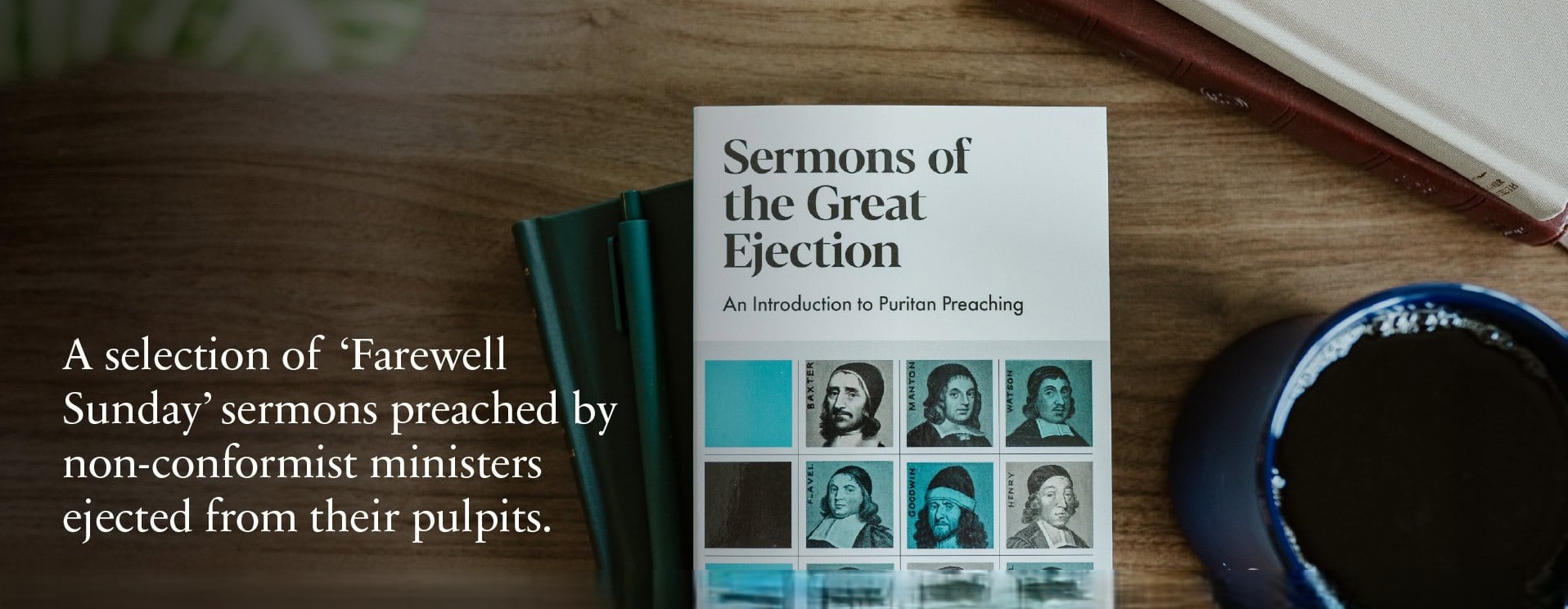
Watson’s sermon “Parting Counsels” can be found in: Sermons of the Great Ejection: An Introduction to Puritan Preaching (Edinburgh: Banner of Truth Trust, 2012) and The Works of Thomas Watson (Grand Rapids: Reformation Heritage Books, 2026) both of which are available in the CRBC library.